Why I believe a slowdown will never occur
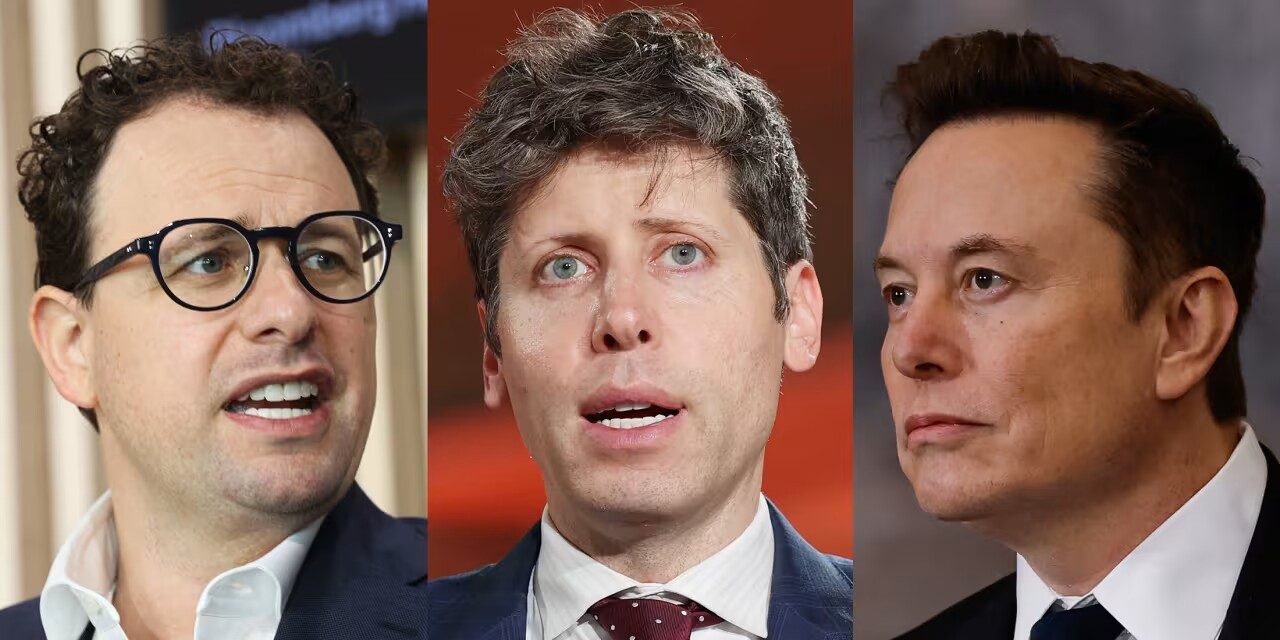
I truly believe that AI is already too embedded in the military and increasingly in the economy for it to slow down enough to ensure alignment. As we continue this race, issues we've already seen with increasingly intelligent AI could continue. We don't even completely understand what alignment means for AI.
This quote from Sam Altman has stuck with me:
“A kid born today will never be smarter than AI, ever. They will just never know any other world. It will seem totally natural... unthinkable that we used to use computers or phones or any kind of technology that was not way smarter than we were. People will look back at the 2020s and think, ‘how bad those people had it.’”
Sam Altman, in Cleo Abram's interview Sam Altman Shows Me GPT-5... And What's Next, 7 August 2025. The quote begins at roughly 35:40.
As Dario Amodei defines it, a slowdown does not mean halting AI progress, models or training. It means slowing the rate of improvement so that alignment and our ability to control these systems have time to keep up.
Dario believes that the speed at which AI is progressing could lead to alignment work falling behind. He points to recent incidents involving AI agents and to recursive self-improvement: the point where AI becomes capable of improving AI development itself.
Early signs of AI accelerating AI research are being seen across the industry. That is not the same as full recursive self-improvement, where an AI can autonomously build its successor. We are not there yet, and it is not inevitable, but we may be moving in that direction.
So the question is: will Dario's plan for a slowdown work?
He believes in three steps, with the first being external evaluation, where third parties outside the company evaluate quality and alignment within frontier models. This is plausible; hire people from an existing firm or organisation that focuses on alignment and have them analyse outputs.
Industrial coordination is the next step and it's where the difficulty begins; how do we get the largest US companies to all agree on the same definitions of what ASI, AGI or RSI truly mean? How do we get them all to agree on the definitions, but also on what rate they should be allowed to progress? Google, Anthropic and OpenAI all have different goals, shareholders and boards with different plans. Getting not only those three companies, but the entire industry, to agree and then be required by law doesn't exactly sound easy.
The most difficult one is global coordination. I personally don't believe this is possible at all, think of all the conflicts: Israel and Palestine, Russia and Ukraine. Now put aside all the conflicts and ask every country to agree on a specific rate of improvement for AI... yeah, not happening. Not only is there a complete lack of trust needed to allow global legislation to be imposed on every country, but every country knows... whoever achieves ASI first, wins, and no country wants to be left last in that race.
Let's take a look at where influential figures stand. Clicking any of the names provides the evidence for these claims.
Slowdown
Race
A slowdown would be very difficult. It would require cooperation between every major US AI company and the president, and to be truly effective it would require China and the rest of the world as well. Along with the extreme difficulty of getting that cooperation, agreements would need to be made on what a slowdown actually means, how much development should slow, how compliance would be checked and when the slowdown would end.
The Trump administration has explicitly framed AI development as a race which the United States must win. That makes persuading the current US government to support a meaningful slowdown even harder.
The logic driving the race is that whoever achieves superintelligence first could gain an overwhelming advantage in every area: healthcare, weapons and across its entire economy. Predicting AI is hard, no outcome is certain and the world could look like 100 different scenarios by 2050. What is certain is that AI is progressing fast.
At the same time, the more capable models become, the harder it may be to know whether they are aligned, gaming an evaluation or only appearing to behave as intended. More capable models can also become better at finding shortcuts, exploiting badly specified goals and hiding behaviour from their evaluators. Researchers have already demonstrated some of these behaviours in controlled experiments. That does not prove that today's models secretly have their own plans, but it does show why evaluating future systems could become much harder.
This is why I don't believe a slowdown will ever happen. It isn't because people don't want one or because alignment doesn't matter, it's because every company and country would have to trust that nobody else is racing ahead in secret. Nobody wants to be the first to slow down and the last to reach ASI.